Zone
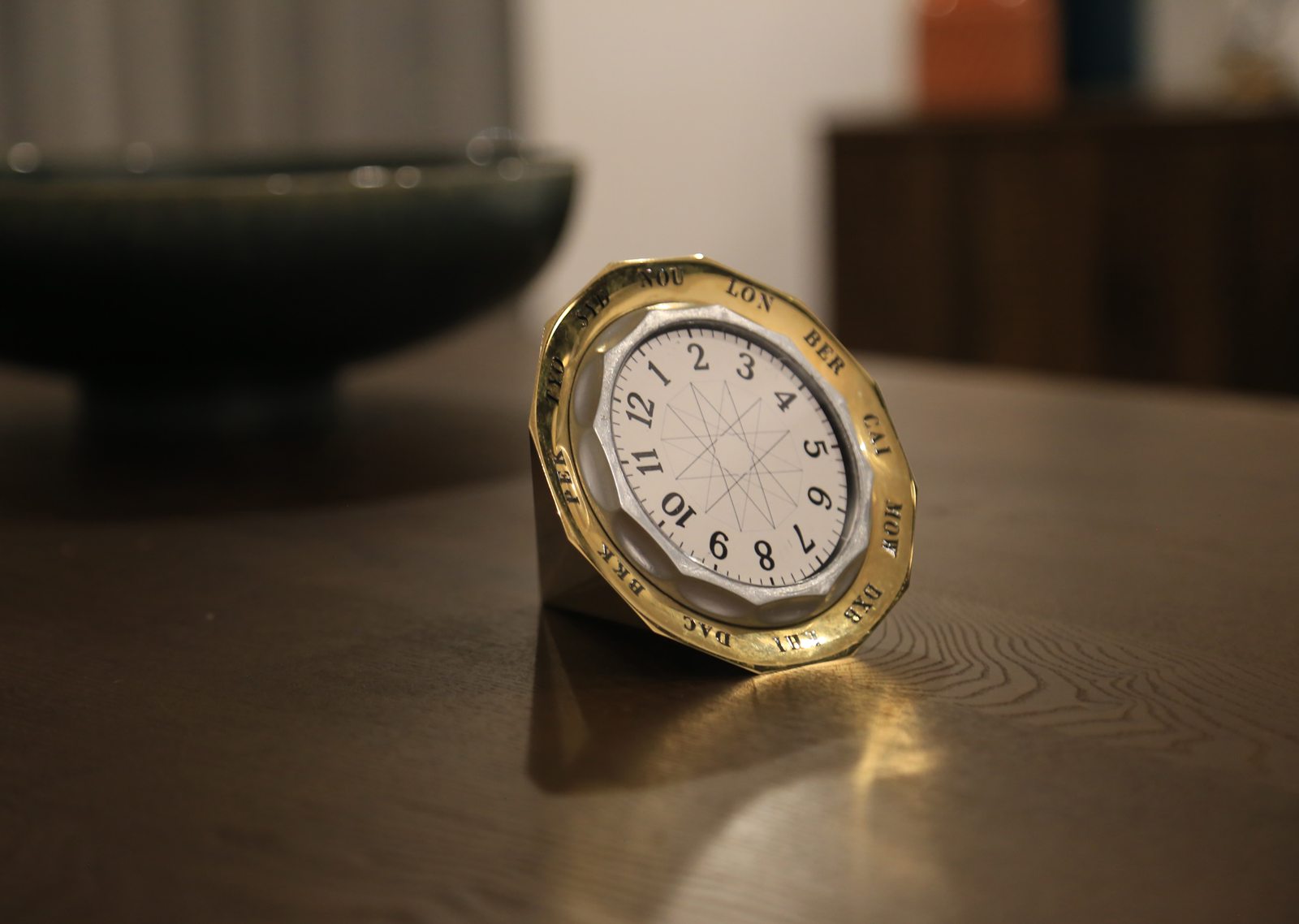
A 12-sided clock designed to connect people across time zones. Instead of hands, the time is read from the top edge of a rotating dial that aligns with a fixed outer shell.
- Type
- Time-zone clock
- Context
- University design project developed in response to a brief created in collaboration with Foster + Partners
- Year
- 2025
- Final piece
- CNC-machined bronze, laser-engraved city abbreviations
- Material accent
- Machined bronze
- Prototypes
- 3D printing, copper sheet, rendered studies
Concept and user interaction
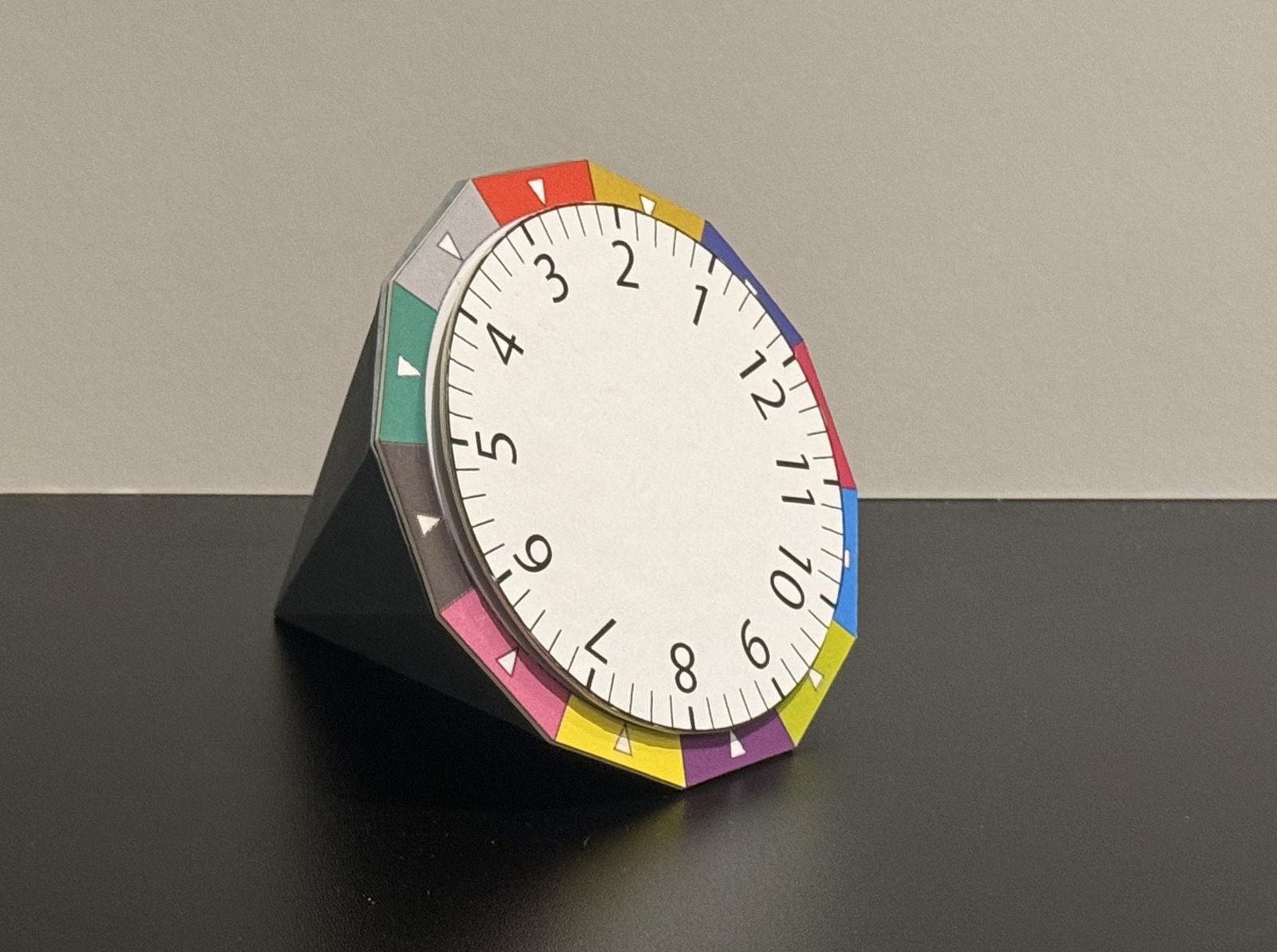
By turning the dial left or right, the user adds or subtracts hours to match another time zone, syncing with someone important to them.
The face is split into 12 colours, so each zone can be associated with a city or person of the user's choice. This first model explored how time could be made more personal and intuitive.
Mechanical development and prototyping
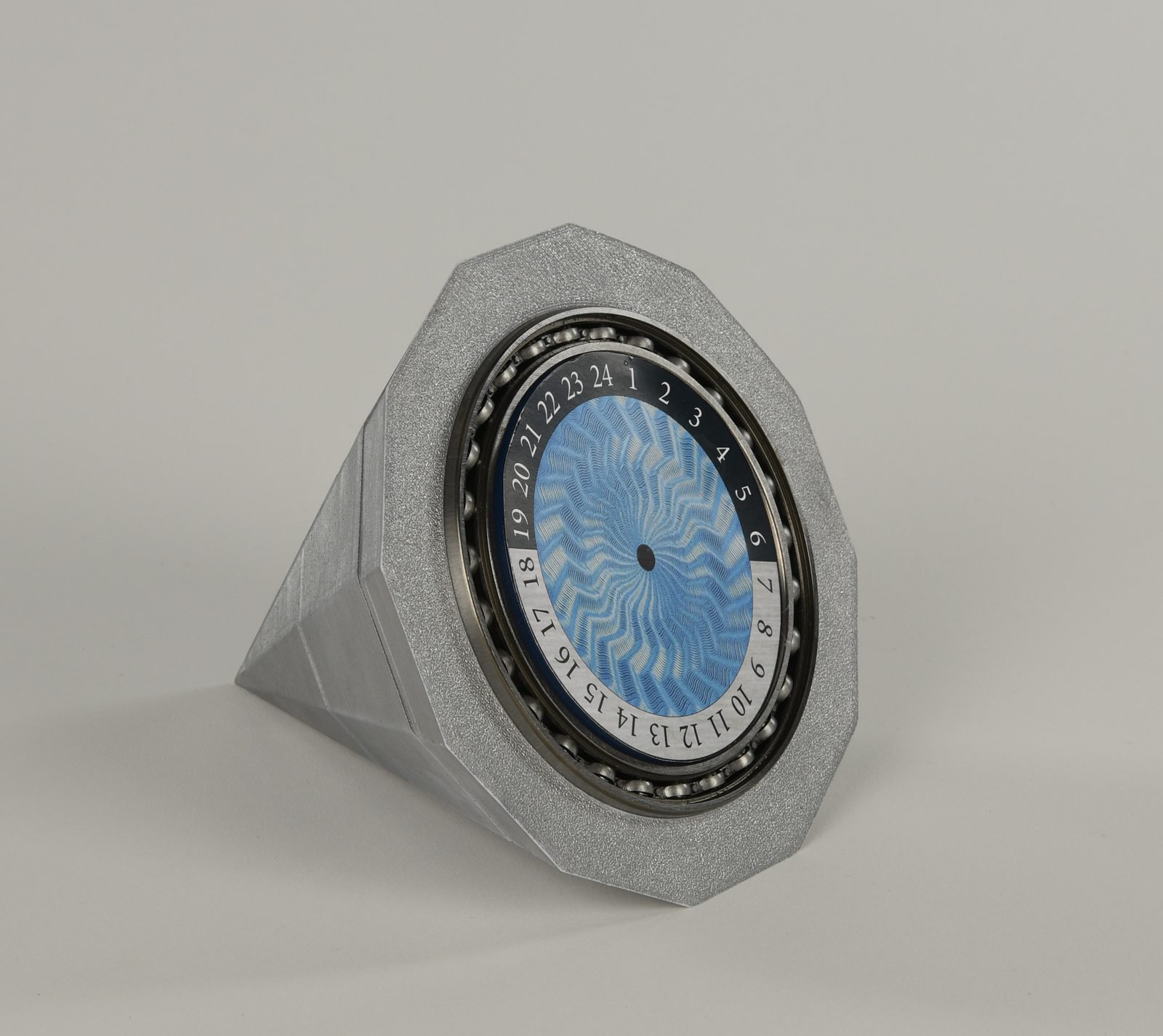
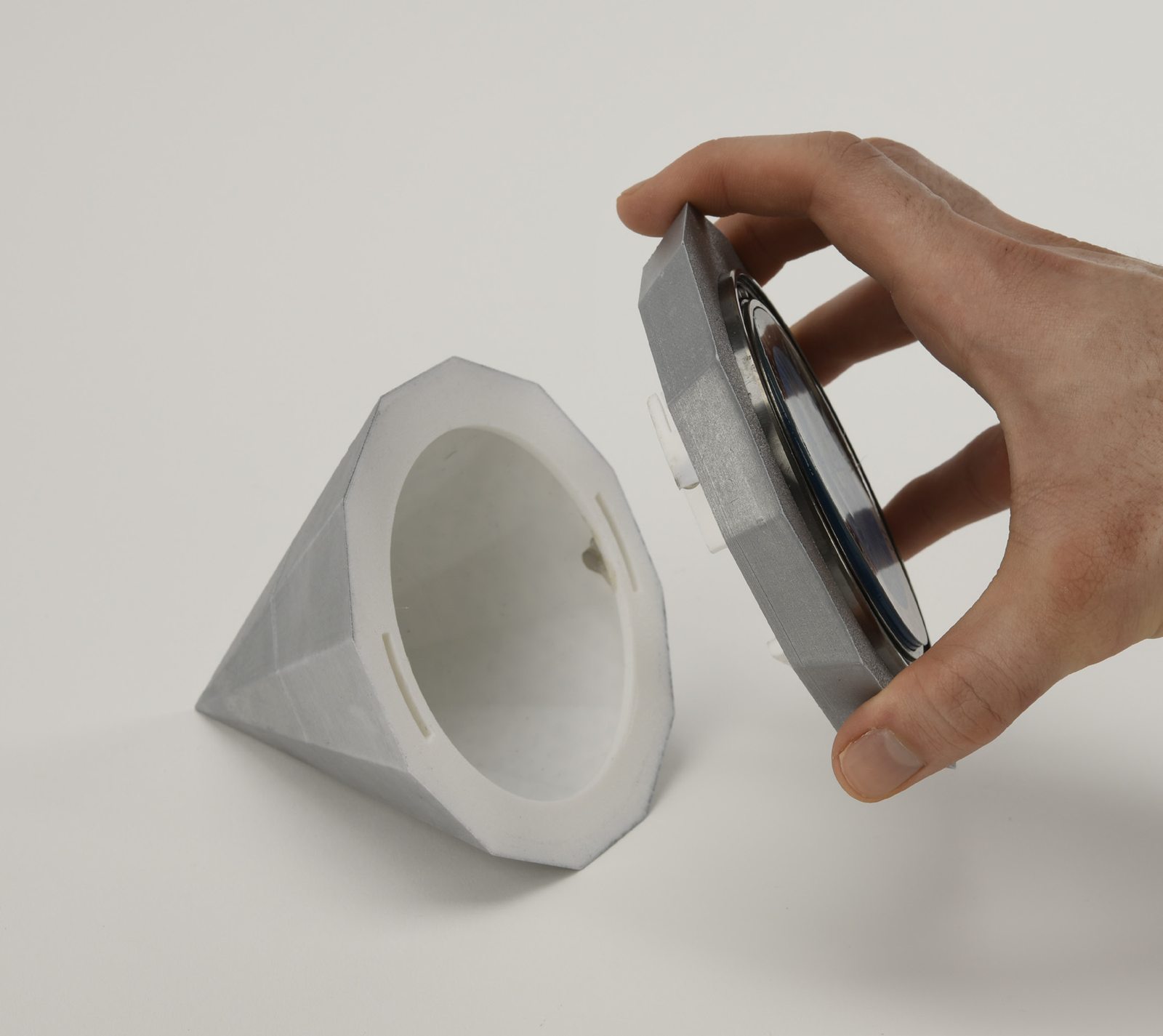
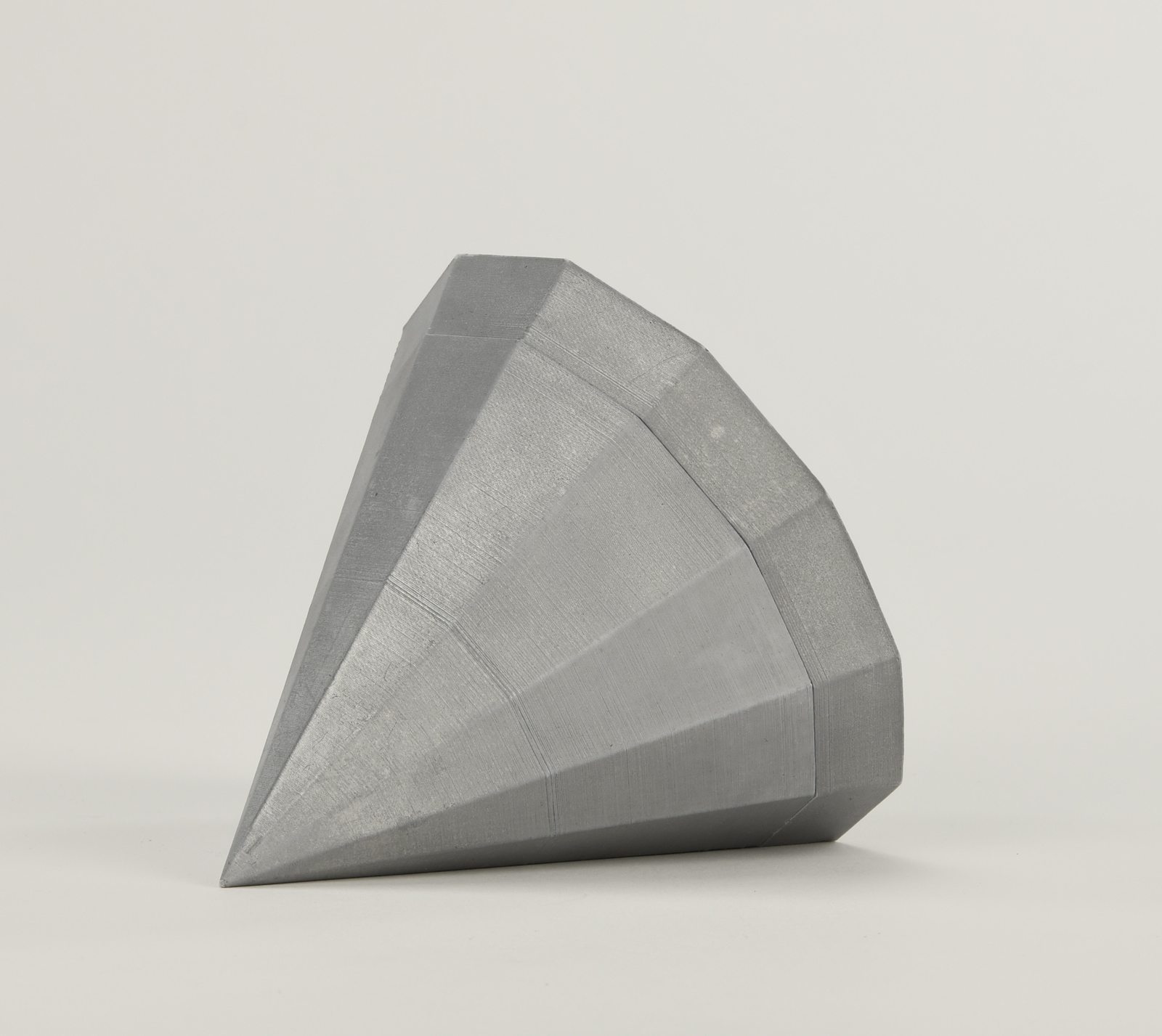
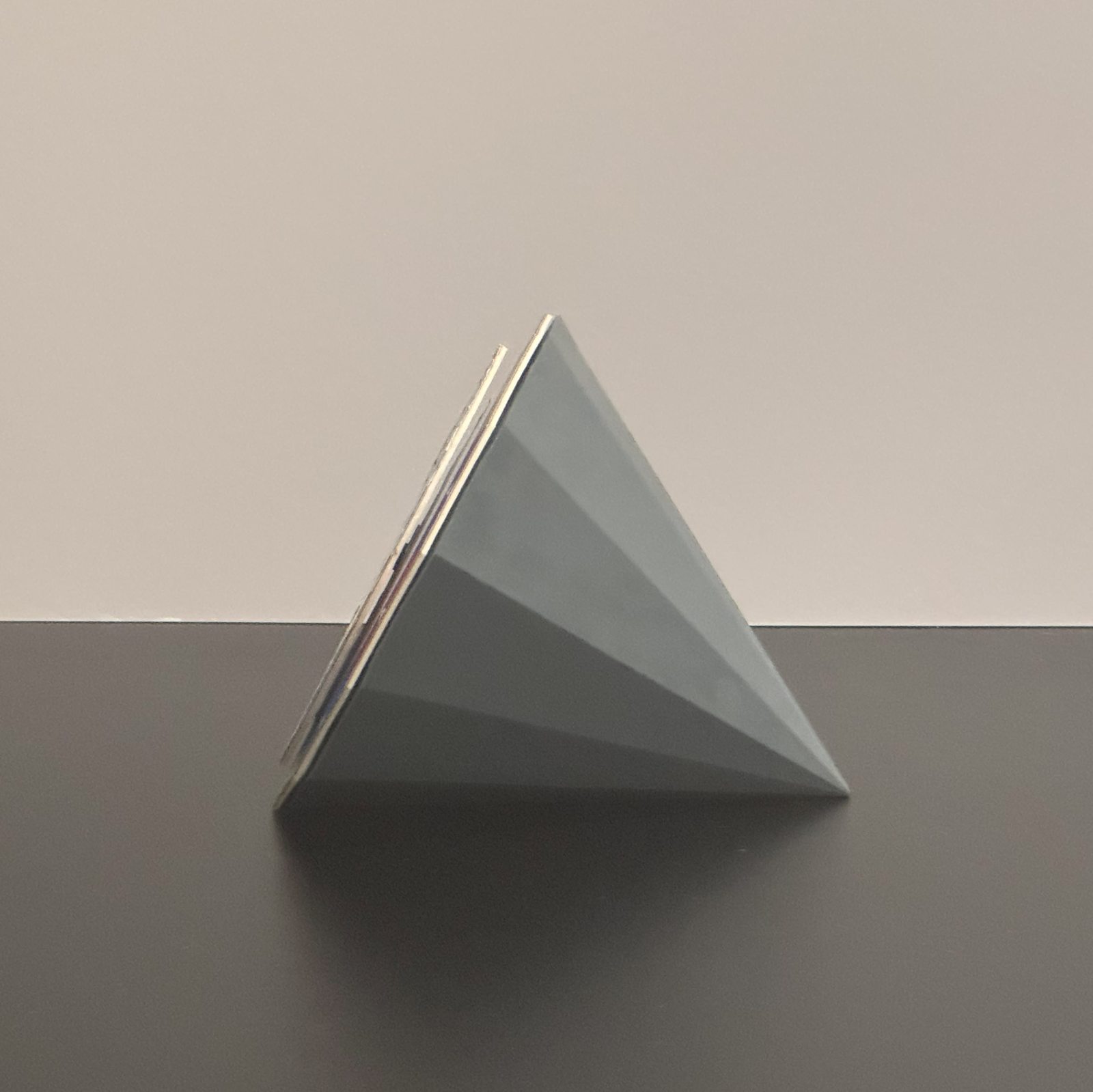
The second model introduced the key mechanical improvements. The main body was 3D printed in two parts to give access to the battery compartment and the time-setting dial underneath, making it more practical to assemble and maintain.
The most important addition was a self-aligning arrow. Mounted on a ball bearing with a counterweight inside, it always points upward, so the dial can rotate independently while the time reference stays fixed.
Material finish and refinement
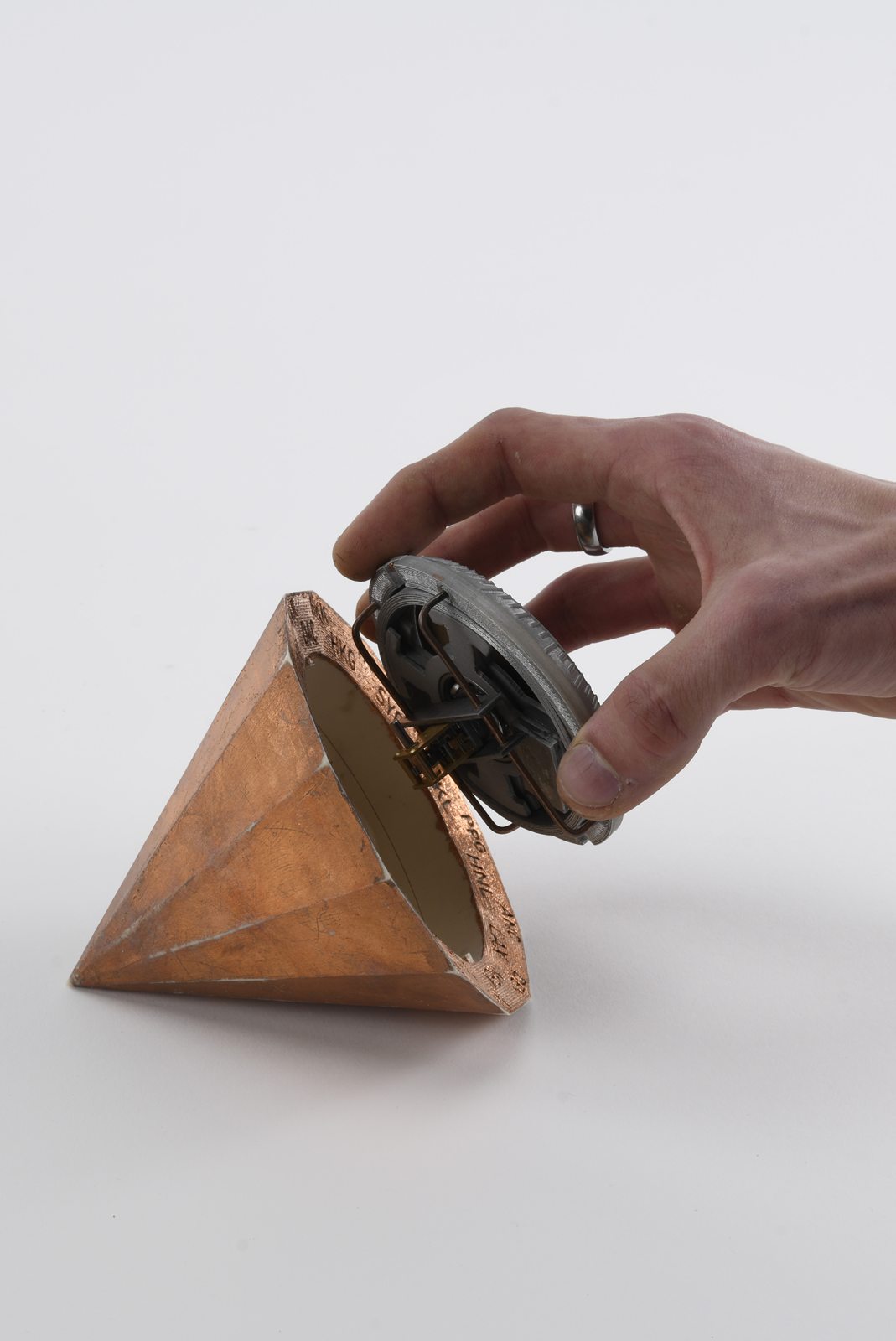
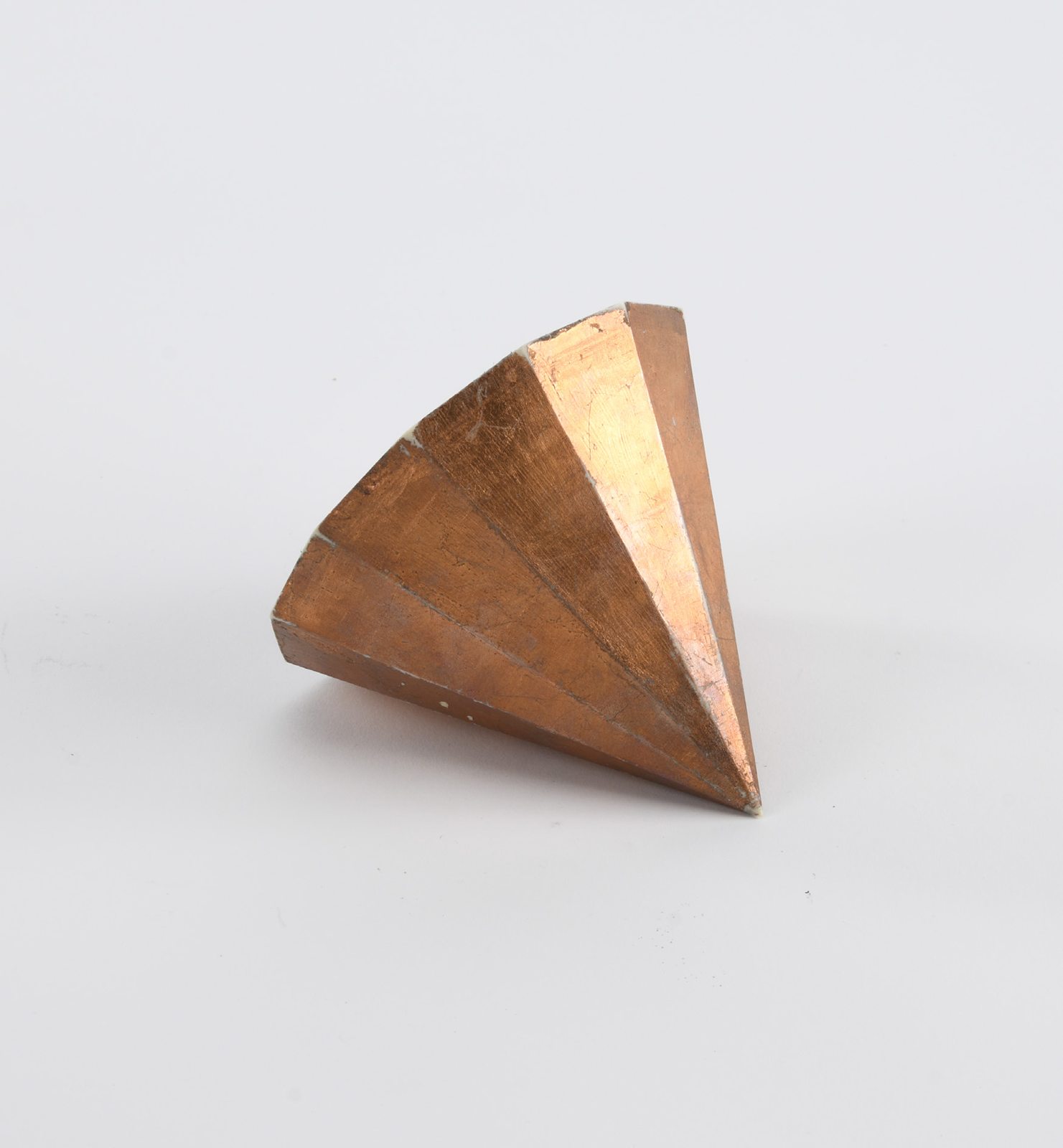
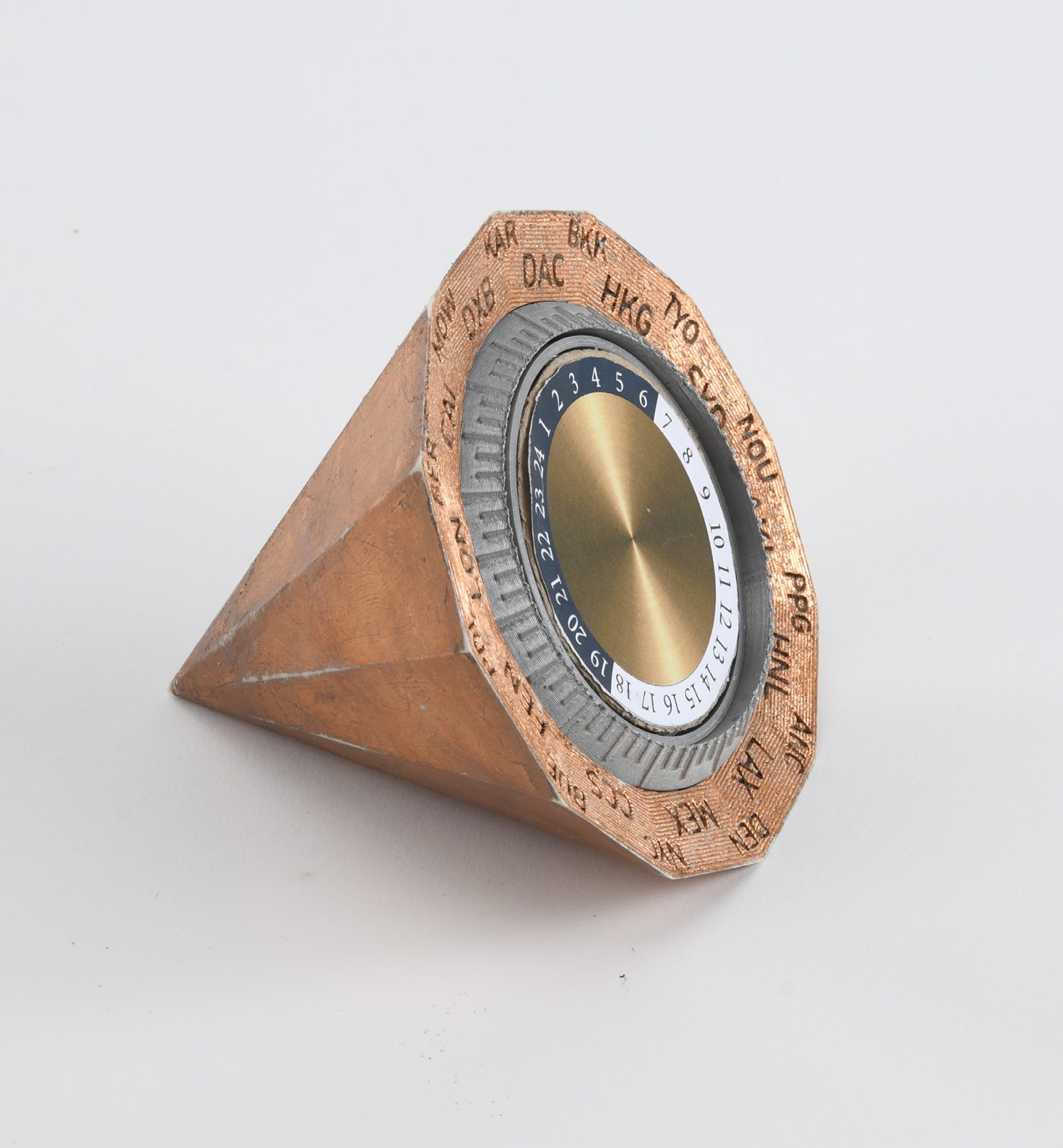
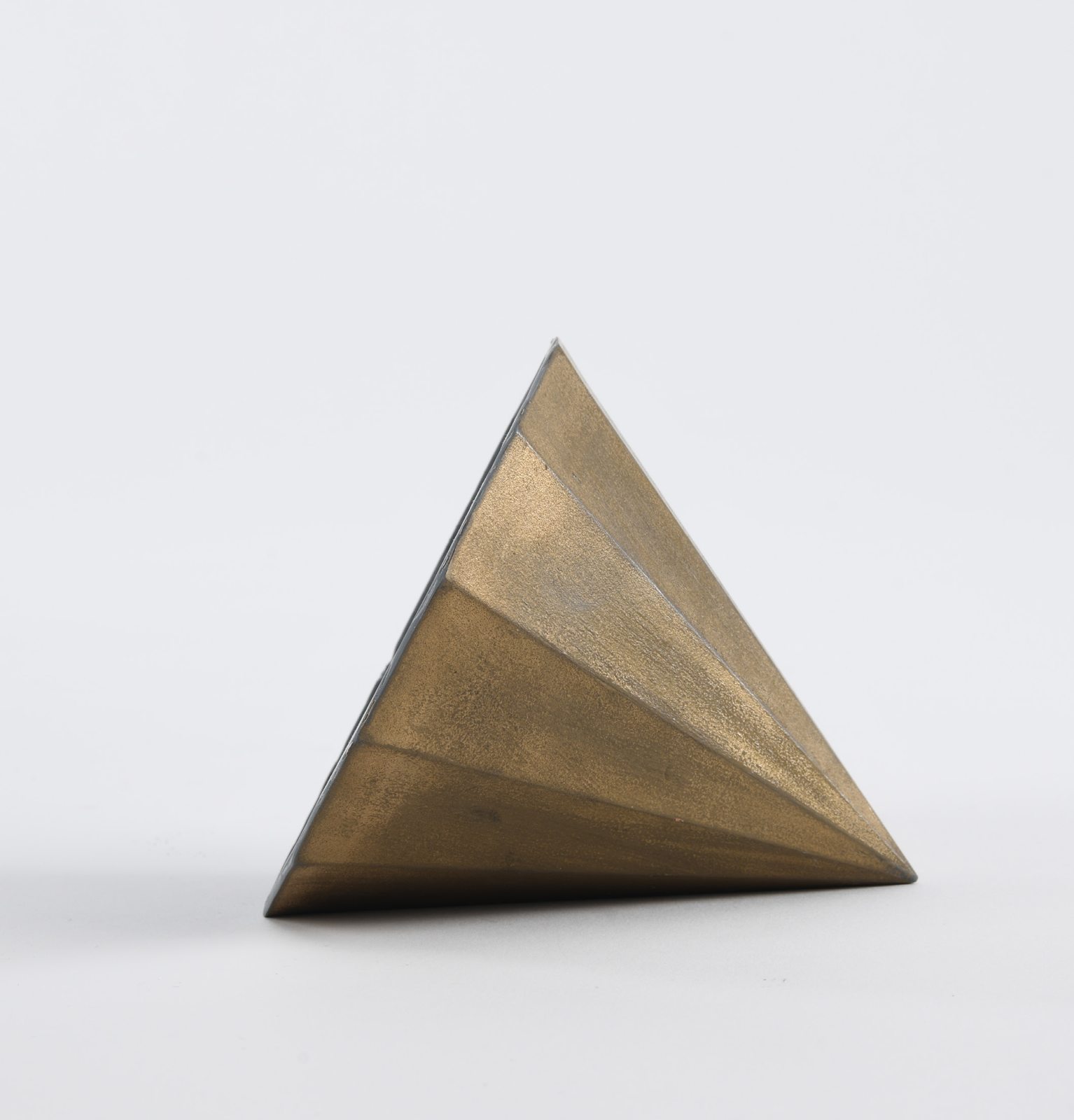
This stage turned the concept into a durable, refined object. Splitting the body for internal access had weakened the structure, so I redesigned the shell as a single solid piece.
Inside, I reworked the counterweight mechanism and added a small motor to drive the movement. Rather than painting the surface, I wrapped the body in copper sheet for a tactile finish that weathers over time.
Format variation
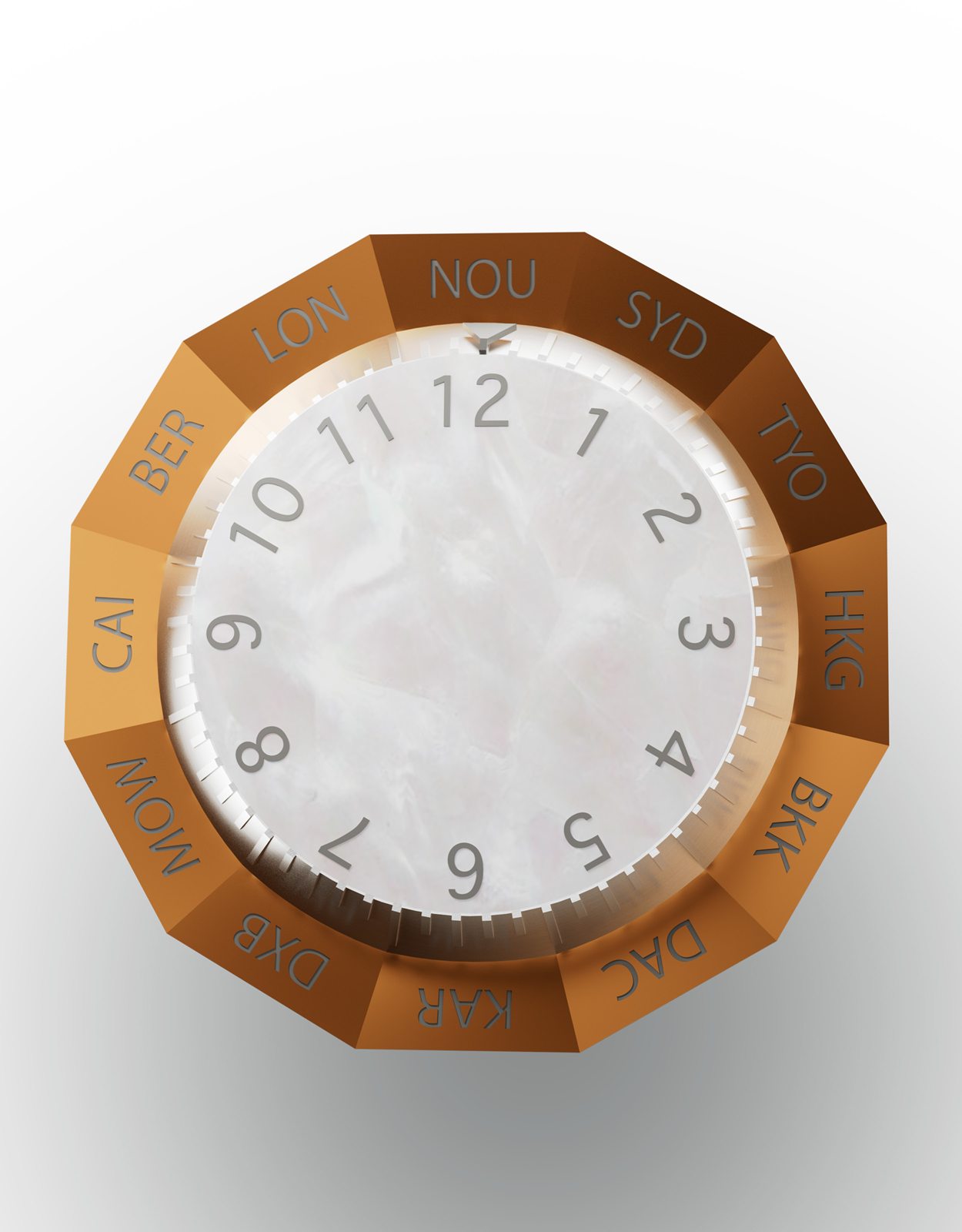
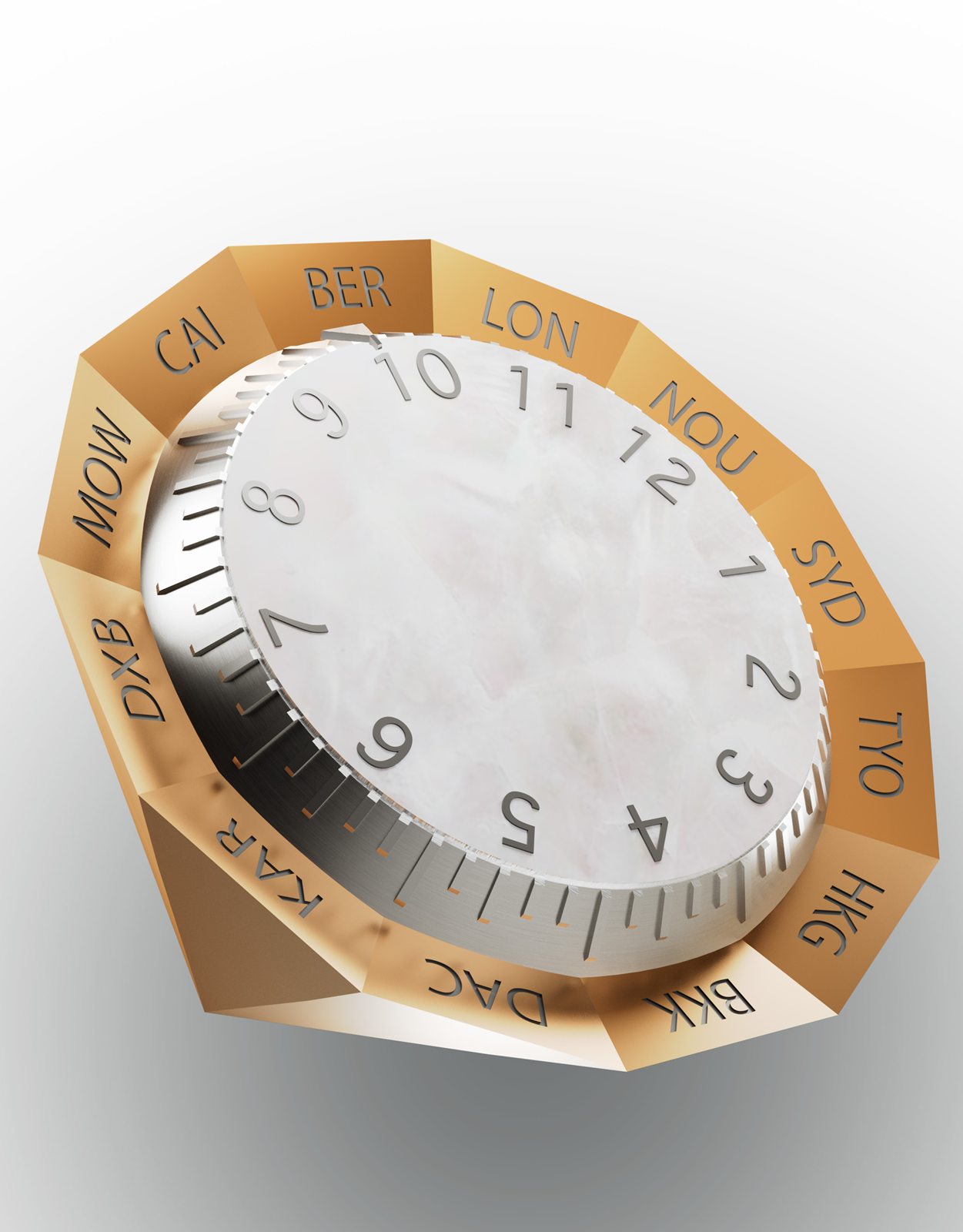
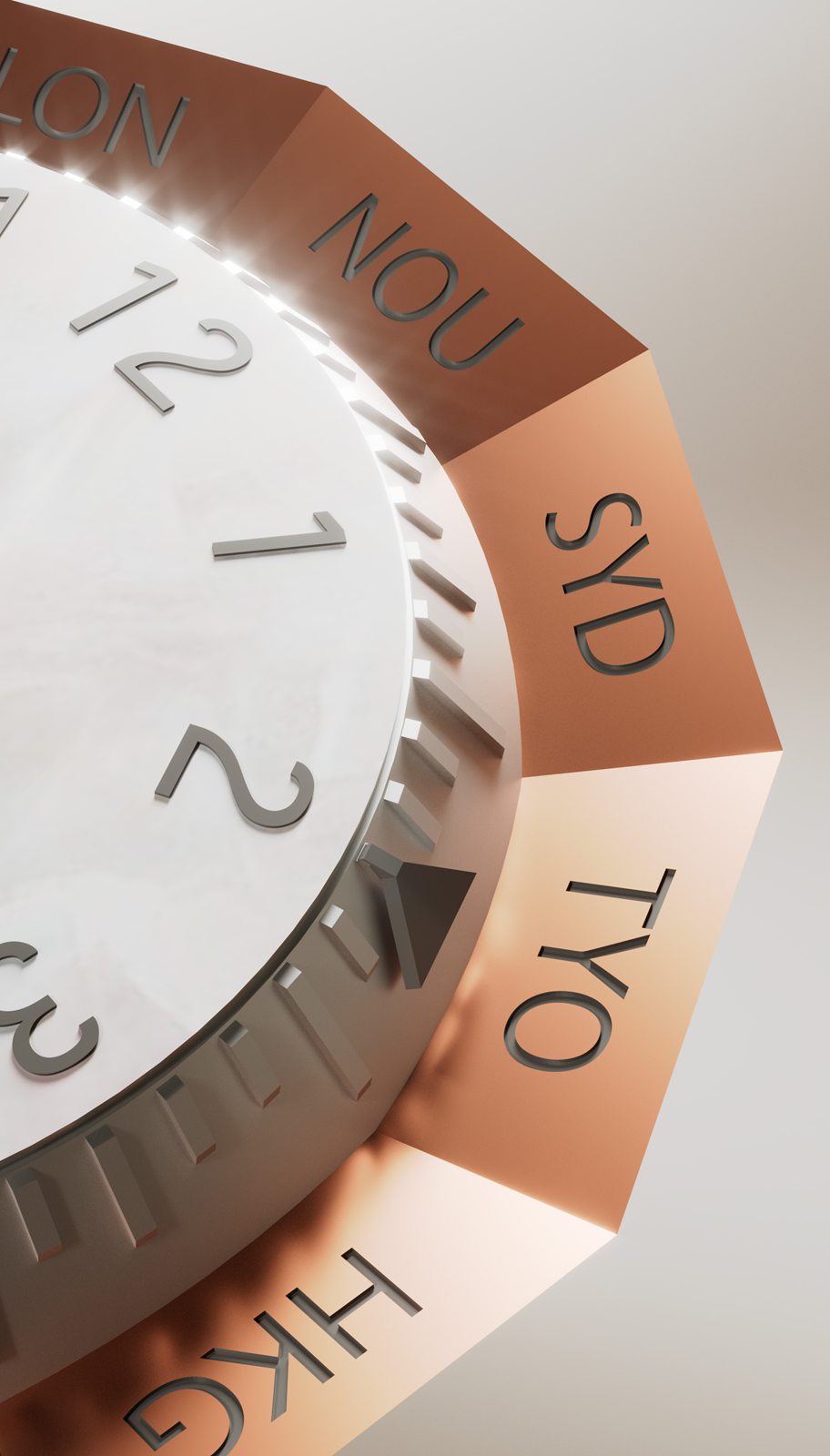
Rendered studies were used to resolve the dial and rim: the twelve faces carry engraved city abbreviations, replacing the colour coding of the first model.
Final design
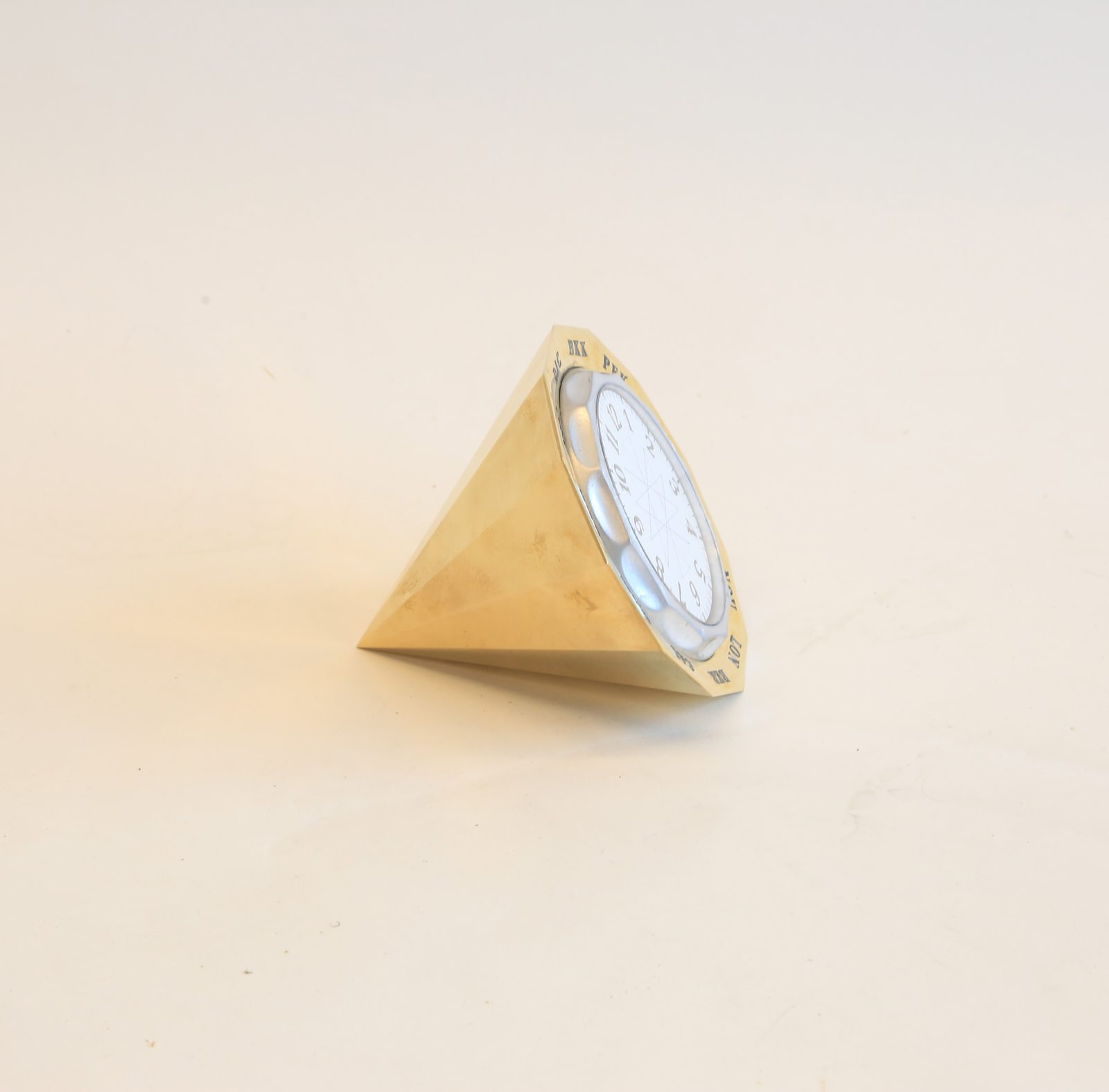
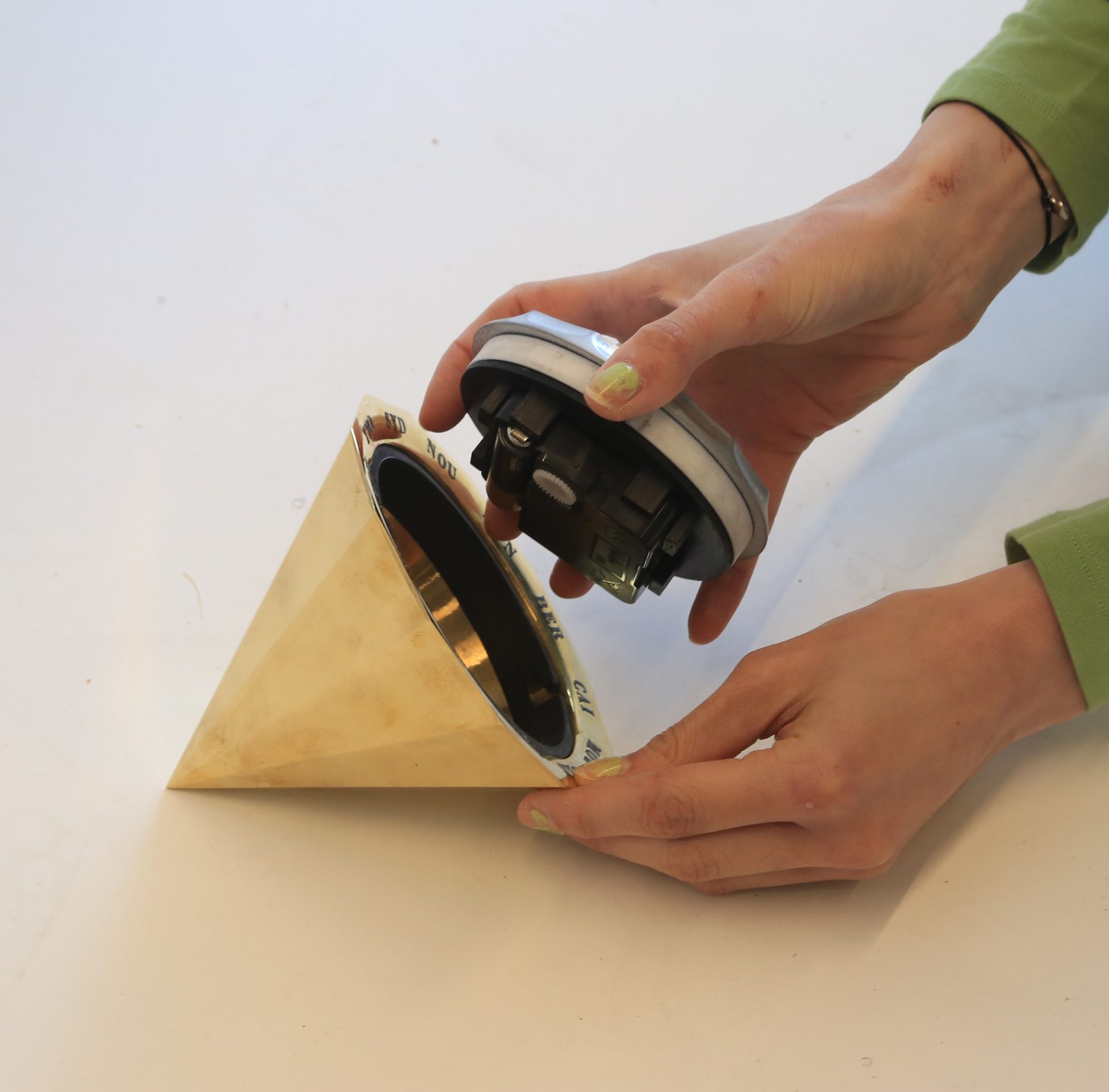
The final ZONE clock has a dodecagonal body CNC-machined from bronze, with city abbreviations laser-engraved around the rim.
The solid casing gives the piece weight and durability, and the engraving ties each face to a place. It is a clock meant to be handled as much as read.